


A Tuesday Sykesville Board of Zoning Appeals decision on the historic Warfield property’s redevelopment is setting the project back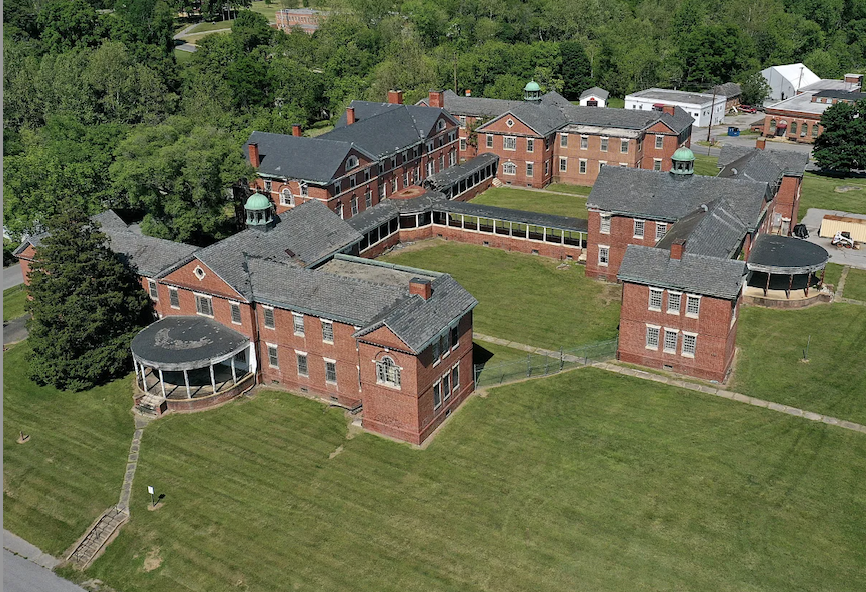 again after years of delays.
Though the town approved plans in April 2025 to change a building’s use from an extended-stay hotel to an assisted-living facility, the Tuesday decision requires more planning and approvals from developers to move forward.
“Any delay impacts costs,” Steven McCleaf, senior vice president of Warfield Companies, said in an interview Thursday. “There seems to be a roadblock at every turn.”
The cost and time impact of the decision is unpredictable. After already experiencing over five years of delays, McCleaf said, developers hope to discuss with town staff how they can move forward in the approval process.
“If we had a good relationship with the town and weren’t in litigation,” McCleaf said, “this project would take off like a rocket ship.”
An ongoing conflict
The board ruled Tuesday to uphold an August administrative decision by Town Manager Joe Cosentini requiring developers to resubmit previously approved plans for the overall development after altering a building’s planned use to an assisted-living facility.
Developers may submit plans for the overall project and the individual property concurrently, Cosentini said, but any changes to the broader plan could require site-specific resubmission.
“An appeal remains very much on the table,” McCleaf said, but developers cannot come to any serious conclusions until the town’s written determination is complete.
The ruling marks the latest turn in a yearslong dispute between the town and the project’s developers over how the historic Warfield property should be redeveloped — including a Feb. 11 town decision denying a request to scale back commercial and employment requirements.
Warfield at Historic Sykesville, a roughly 90-acre campus along Route 32, was formerly part of the state-run Springfield Hospital Center. It was transferred from the state to the town in 2002 and sold for $8.2 million to Warfield Companies in 2018 under an agreement that the developer would restore several historic buildings on the site.
Developers completed 145 town homes in 2023, but the town sued Warfield Historic Properties later that year for $1.2 million and the return of 12 historic buildings, citing “little progress” on restoration. Warfield Companies countersued in August.
After the town moved to foreclose on the property in March 2024, developer entities filed for Chapter 11 bankruptcy protection. Warfield Companies later filed a $20 million adversary proceeding against the town, alleging the town’s actions prevented the project from moving forward and reduced its economic value. The town launched a counterclaim shortly after. Both lawsuits are ongoing, McCleaf said.
The zoning board’s decision
Early concept plans approved in 2016 showed a building on the Warfield property as a hotel. When developer Thrive at Warfield received a conditional use permit in April 2025 to convert it into an assisted-living facility, Cosentini said the change in use required updated plans under the town’s code.
“The code does not invite judgment calls about whether differences are minor, inconsequential or refinements,” Cosentini told the board during a Feb. 4 hearing.
Thrive at Warfield appealed, arguing the determination was “arbitrary and capricious, unreasonable and legally erroneous.”
Restarting the process would leave developers “stuck in a circle” of continuously updating plans as additional details emerge, said Sean Davis, a principal with engineering firm Morris & Ritchie Associates, during a Feb. 4 hearing.
Davis cited a similar approval process in 2019 where developers were not required to amend approved site plans.
The board disagreed, saying Cosentini’s decision was consistent with town code and was not arbitrary or unreasonable.
The board said a detailed written opinion will be issued in the coming weeks. The 30-day appeal period will begin once the written decision is filed.
 have suffered a loss of “economic value” because of actions by the town that have left them unable to completely develop their property.
 The housing market in Carroll County has seen improvements, with an increase in home sales and a decrease in prices compared to the same period last year. Housing sales rose by 13.6% in September, with 159 homes sold, up from 140 the previous year. This indicates a positive shift in the market, as it was previously plagued by low sales, shrinking inventory, and climbing prices. The housing market landscape in the county appears to be heading in a more favorable direction, providing opportunities for both buyers and sellers.
  The commercial real estate sector is showing signs of recovery, with industry optimism growing. However, the report cautions that the recovery will be slow and gradual, with interest rates expected to continue declining and tenant demand potentially falling. The pandemic has accelerated population migration patterns, with Sun Belt cities continuing to attract new arrivals, though at a slower pace.
  Demographic shifts are transforming U.S. housing demand, with the market projected to reach $5.85 trillion by 2030, largely due to a 47% increase in the senior population by 2050. Rising living costs are extending rental periods for young adults and increasing single-person households. Demand for single-family rentals (SFRs) and manufactured housing is growing, while student housing may struggle with a shrinking college-age demographic.
 The Biden administration announced a $100 million investment to combat barriers to affordable housing construction through a new grant program. The program will provide funding to state and local governments and other entities to develop and implement plans to facilitate affordable housing production.
 The Maryland housing market continues to see rising home prices, with prices up 2.5% per quarter on average, despite a slight slowdown in the market. Inventory is declining, and homes are selling quickly, often within a week, driven by steady demand from government workers and military personnel. While some homes are still selling above list price, the state is working to make homeownership more affordable through various assistance programs. Analysts predict the Maryland housing market will remain strong, with low inventory and stable or rising prices, though potential buyers may face affordability challenges. Overall, the Maryland housing market favors sellers, but buyers have options to help offset the impact of high interest rates.
  The affordable housing crisis in the nation is well-known, and real estate developers and planners are eager to address the issue. However, one of the main challenges they face is not financing or construction but gaining community support for their projects. According to a survey conducted by coUrbanize, two-thirds of developers and planners stated that their most active projects in the next six months will be building affordable and supportive housing. Despite 94% of respondents attempting to gain community input and support through public meetings, many were frustrated by low attendance and lack of productivity. The greatest barrier to engagement, as identified by 60% of respondents, was the lack of staff time.
  The latest Realtor.com Rental Report reveals that renting a starter home has become more financially advantageous than buying in all 50 largest metropolitan areas in the United States, driven by elevated mortgage rates, high home prices, and a decline in rents. On average, renting a starter home is $1,067 per month, less expensive than buying, with cities like Austin, Texas, Seattle, Los Angeles, San Francisco, and New York seeing the most significant savings for renters. While renting remains more economical overall, the advantage is beginning to diminish in some areas as home prices and affordability improve, but certain markets like Memphis and Birmingham have become more rent-favoring due to increased investor activity.
  Carroll County’s unemployment rate is currently at a low of 2.7%, but officials are still working to attract new businesses and create more jobs for its residents. The Board of Carroll County Commissioners recently approved the allocation of $150,000 toward business expansion and new job creation. Denise Beaver, the director of the county’s Department of Economic Development, commented on the funding, indicating that the county is committed to ongoing efforts to support economic growth and job opportunities. This initiative reflects the county’s proactive approach to maintaining a thriving local economy and providing employment options for its community.
  Bipartisan bills in Congress would create a federal tax credit to convert underused commercial properties into affordable housing, addressing vacant spaces and the housing crisis. The $15 billion program would cover up to 20% of conversion costs, with extra incentives for economically distressed areas. The credit is designed to work with existing affordable and historic tax credits to make conversions viable. While the bill has broad support, historic tax credit stakeholders have some concerns. The legislation is unlikely to pass this year but has a good chance in 2025.
  Rental prices nationwide have cooled off, with smaller year-over-year increases, as new housing construction finally hits the market.
 More young adults are finding themselves nestled back in the family home, with a whopping 17% of 25-35-year-olds now living with their parents – a drastic increase from just 7% in 1970. This phenomenon is driven by the skyrocketing costs of housing, forcing many to roost at home well into their thirties, despite stories of children eager to flee the nest.
 Southern cities like Raleigh, Austin, and Atlanta are emerging as top destinations for 20-somethings seeking entry-level jobs with good salaries and affordable living, offering a combination of brisk hiring, cost-of-living-adjusted wages, and a concentration of industries like technology, healthcare, and finance.
 Despite warnings of a looming commercial real estate (CRE) crisis, smaller banks have largely avoided major issues. They tend to focus on suburban office and local business properties that have held up better than the troubled big-city office market. While some banks are reducing CRE exposure, they are not lending as much, creating an opportunity for private credit providers to step in with more expensive financing.
  Lenders are tightening their grip on the commercial real estate (CRE) market as borrowers struggle to meet their obligations, leading to a surge in foreclosure activity. Analysts have been closely monitoring the status of CRE loans, including CMBS, bank loans, and properties in special servicing, revealing a concerning trend of delinquencies.
 She says her decision to close was fueled by uncertainty — about the neighborhood, about the economy and about consumer behavior. Her uncertainty is a symptom of a larger plague spreading across Silver Spring, where a once-vibrant downtown commercial district is now lined with vacant storefronts and half-empty office buildings.
  Jamauri Bogan, a 28-year-old developer in Kalamazoo, Michigan, has a pretty simple strategy for finding out what young apartment tenants want. He calls his friends.
 A developer has broken ground on a new affordable-housing development on East Patrick Street. The development, called Overlook East, will include 85 units across three buildings and have capacity for more than 300 people. Scheduled to open in late 2025, it is meant to serve people and families making up to 60% of the area median income.
  Middle-aged Americans, part of Generation X, say they will need to rely on family for housing help in retirement (but they haven’t told them yet!). Young adult children have spent years relying on funding from the Bank of Mom and Dad, and now their parents say they may soon need to mooch off of them. Read the full article
  Although affordable housing has gained a previously unheard-of amount of visibility at the federal level over the last few years, the realities of Washington, D.C., are tossing cold water on activists’ hopes for quicker change.
 Baltimore is undergoing a significant transformation with billions in investments aimed at revitalizing the city. Key projects include a $500 million redevelopment of the Inner Harbor, major stadium renovations, and the $5.5 billion Baltimore Peninsula project. These developments are expected to attract investors, residents, and tourists, but also bring challenges such as housing affordability and congestion. City leaders emphasize the need for new housing and improved public transit to sustain growth and maintain Baltimore’s unique identity
  U.S. housing starts have plummeted to a four-year low, signaling potential trouble ahead for the real estate market. The sharp decline in new construction is attributed to rising interest rates, economic uncertainty, and higher material costs. This downturn could impact home affordability and availability, making it a critical moment for prospective buyers and investors to stay informed.
  Carroll County officials are seeking resident input to improve affordable and safe housing in the area. They are conducting a survey to gather community feedback on housing needs and challenges, aiming to develop better policies. Residents are encouraged to share their experiences and suggestions to help shape future housing strategies.
 Bank of America warns that the U.S. housing market faces prolonged challenges, predicting high prices, limited inventory, and persistently high mortgage rates until at least 2026. Despite slight recent declines in mortgage rates, economists see no immediate solutions, emphasizing that these issues will take years to resolve. Prospective homebuyers should brace for continued market difficulties and limited affordability. Read more about the implications for the housing market and potential strategies for buyers in the full article
  The 2024 State of the Nation’s Housing report reveals persistent and widespread cost burdens, with 50% of renters spending over 30% of their income on housing. The U.S. faces a significant housing shortage, with rising costs and limited inventory hindering both rentals and homeownership. Federal rental assistance is lagging, covering only 25% of eligible households. Additionally, the nation’s housing stock is increasingly vulnerable to climate risks. Addressing these issues requires substantial public and private sector investment and innovative solutions. Read the full article
  Marylander can get a good job, earn good pay and pass something on to their children — besides debt.